
Canada: 2 Containers from Yiwu Every Month
By Hasan Olwan · Last updated: September 30, 2026
Summary: A home décor retailer with four stores in the Greater Toronto Area and an online shop that delivers across Canada has sourced from Yiwu through OLWAN since 2015. They import wall clocks, mirrors, wall art, artificial plants, occasional furniture and home accessories, and today they receive 2 containers from us every month. One team in Yiwu handles everything from buying to export documents.
| Client | Home décor retailer, 4 stores in the Greater Toronto Area + online store (name withheld) |
| Products | Wall clocks, decorative mirrors, oil paintings and art prints, artificial trees and flowers, coffee and side tables, rugs and cushions, vases and accessories |
| Working together since | 2015 |
| Volume | 2 containers per month |
| Services | Yiwu market buying, factory sourcing across China, production follow-up, quality inspection, warehouse consolidation, sea freight to a Canadian port with full export documents |
The problem
Before 2015, this retailer bought directly from sellers on Alibaba. The prices looked good on screen, but four problems kept coming back:
- Quality. What arrived in Toronto didn’t always match the samples or the listing photos. By the time a problem showed up, the goods were already paid for and on the shelf.
- Production follow-up. Nobody on the ground was checking progress at the factory. Delays were found out late, usually when the ship date had already passed.
- Consolidation. A home décor store needs many products from many different suppliers: clocks from one factory, mirrors from another, artificial plants from a third. Getting all of them into one container, on time, was close to impossible from Canada.
- Shipping. With several suppliers shipping separately, costs went up and arrival dates were hard to plan around.
The decision
We moved the whole supply line to our team in Yiwu, so one team handles every step from the first order to the loaded container:
- Buying from two sources. Ready-made items like vases, artificial flowers and accessories come from the Yiwu market, where small quantities are easy to buy. Tables, mirrors and wall clocks come from factories outside Zhejiang province. Some products are made to this client’s own specifications, and those are produced at factories too.
- Production follow-up. We follow every order at the factory and report delays early, before they become late shipments.
- Quality checks at three points. Before production, we check the sample and confirm every specification with the factory. During production, we inspect once more. Before shipping, we check the goods again in our warehouse. Problems get fixed in China, not found in a Toronto store.
- Consolidation. Products from all suppliers are collected in our Yiwu warehouse and loaded together into one container.
- Shipping and documents. We book the container to a Canadian port and prepare every document the client needs for customs, including the commercial invoice, packing list and bill of lading. The client handles customs clearance in Canada with the documents we send.
The evidence
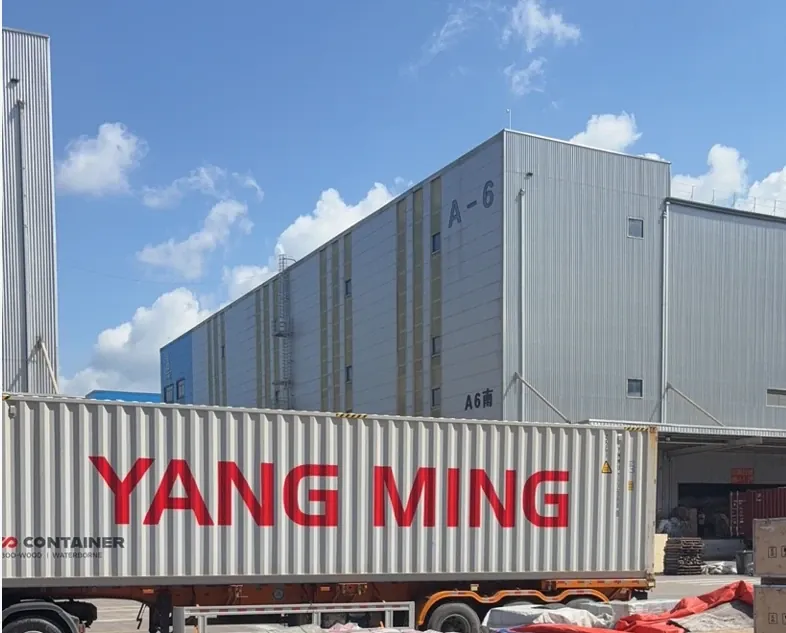
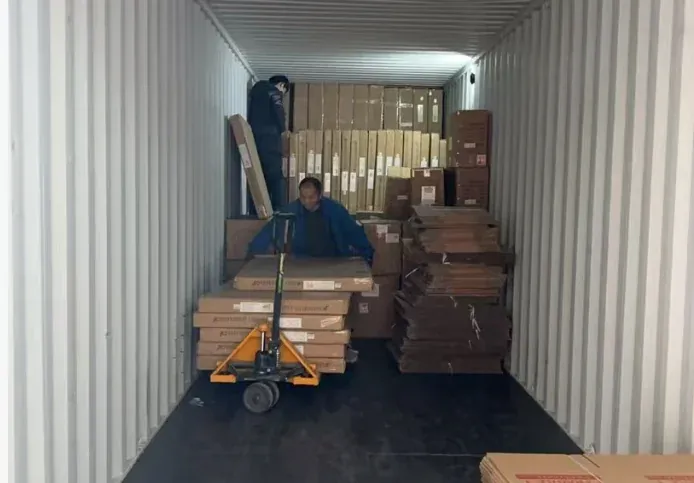
Both photos are from this client’s shipments: a container arriving at the warehouse in Yiwu, and our team loading flat-packed cartons of their goods.
The result
The best result in this story is time. The client started with us in 2015 and is still with us more than 10 years later.
- 2 containers every month from Yiwu to Canada.
- One team in China handles buying, factory follow-up, quality checks, consolidation and export documents.
- Custom products made to the client’s own specifications, alongside ready-made items from the Yiwu market.
- 4 stores and an online shop in Canada, stocked from one supply line.
What other importers can learn
After more than 10 years working with this client, these are the three lessons I’d share with any retailer:
- Cheap on the screen isn’t cheap in the store. A low price on Alibaba means little if the goods arrive wrong or late. Count what a bad shipment really costs you before you compare prices.
- Check before production, not only before shipping. Most problems start with a sample nobody confirmed or a specification that wasn’t clear. Fixing that on day one is much cheaper than fixing it in a loaded container.
- One container from many suppliers needs one team in China. If you sell many different products, someone has to collect them, check them and load them together. That’s what makes a monthly schedule possible.