
China Quality Inspection Checklist
By Hasan Olwan, in Yiwu since 2009 · Last updated: September 24, 2026
The short answer: a quality inspection checklist lists everything the inspector checks on your finished goods before you pay the balance: quantity, appearance, size and weight, function, packaging, labels and cartons. It also sets how many units to check (the sample size) and how many defects you’ll accept (the AQL). Write it before production starts and share it with the supplier, so everyone checks against the same standard.
Below is the checklist structure we use for pre-shipment inspections in China, section by section, plus a free template.
1. Order details
- Product name, model and color
- Order quantity and the quantity finished and packed on inspection day
- Approved sample: the “golden sample” you signed off
- Your specification sheet and any drawings
2. Quantity check
- Count finished units and packed cartons
- If less than 80% is packed, the inspection can’t give a reliable result
3. Appearance and workmanship
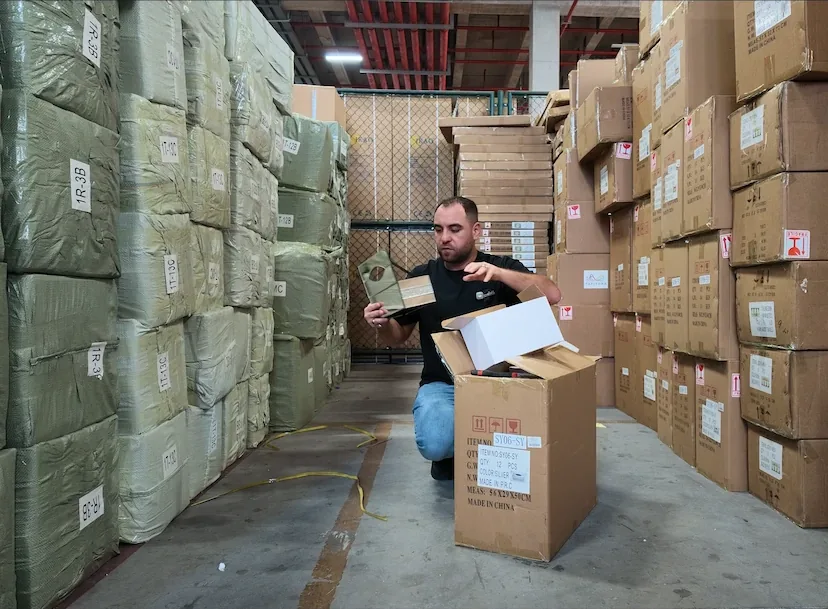
- Scratches, stains, dents, loose threads, uneven color
- Color matches the approved sample
- Logo and printing: position, size, sharpness, spelling
4. Size, weight and materials
- Measure product dimensions against the specification, with the tolerance allowed
- Weigh the product and the packed carton
- Check materials match: fabric, plastic type, metal finish
5. Function and safety
- Test everything that moves or works: zippers, switches, lids, wheels, batteries
- Assembly: parts fit, screws tighten, nothing missing
- Sharp edges, small parts, smell
6. Packaging and labeling
- Retail packaging matches your design
- Barcodes scan (for Amazon: FNSKU labels on every unit)
- Required warnings and “Made in China” marks (the rules differ by country, so check what your market requires)
- Inner packing protects the product
7. Cartons
- Carton size and weight match the packing list
- Shipping marks correct on every carton
- A drop test on a sample carton if the goods are fragile
What is AQL, and which should I use?
AQL (Acceptance Quality Limit) is the maximum defect rate you’ll accept in a random sample, based on the ISO 2859-1 sampling standard. The order size decides how many units the inspector checks, and the AQL decides how many defects are allowed before the order fails.
| Defect type | Meaning | Common AQL |
|---|---|---|
| Critical | Unsafe or illegal | 0 (none allowed) |
| Major | The customer would return it | 2.5 |
| Minor | Small flaw, product still usable | 4.0 |
These are common starting points for consumer goods. Stricter products, like items for children, often use lower limits.
Free checklist template
→ also in our proof library
Summary
- Write the checklist before production and share it with the supplier.
- Cover quantity, appearance, size, function, packaging, labels and cartons.
- Set your AQL: 0 critical, 2.5 major and 4.0 minor are common starting points.
- Inspect before you pay the balance, when the supplier still has a reason to fix problems.
We run inspections from $200 per man-day, and most single-product inspections take one day. Before inspection comes the supplier check: How to Verify a Chinese Supplier.