
FOB vs CIF vs DDP: Who Pays What When You Import from China

The short answer: with FOB, the supplier pays until the goods are loaded on the ship in China, and you pay the rest. With CIF, the supplier also pays freight and basic insurance to your port, but you still handle customs, duties and delivery. With DDP, one price covers everything to your door.

New importers often make the same mistake on their first order: they compare two quotes by the number alone. A $5,000 FOB quote and a $5,000 DDP quote aren’t the same offer, because each one covers different costs.

These terms are called Incoterms, and they’re published by the International Chamber of Commerce. This guide shows who pays for what under each one, where your risk starts, and how to choose.

In this guide

Who pays what

Cost or taskFOBCIFDDP
Inland transport to the port in ChinaSupplierSupplierSeller’s side
Export clearance in ChinaSupplierSupplierSeller’s side
Ocean freightYouSupplierSeller’s side
Cargo insuranceYou (your choice)Supplier (basic cover)Seller’s side decides
Import customs clearanceYouYouSeller’s side
Duties and import taxesYouYouSeller’s side
Delivery to your doorYouYouSeller’s side

The further you move from FOB to DDP, the more the other side handles, and the more of it is priced into their number. None of them is cheapest by default. Each one suits a different buyer.

What is FOB?

FOB (Free On Board): the supplier is responsible until the goods are on board the ship at the named port in China. From then on, freight, insurance, customs, duties and delivery are yours.

Choose it if you have a freight forwarder you trust and want control over the carrier, the timing and the cost. It tends to work out well for repeat orders, because you see each cost and don’t pay the supplier’s margin on freight.

The catch: you need that forwarder before you start. Without one, you’re coordinating a step you’ve never done.

One detail most guides skip: ICC’s notes on Incoterms 2020 say FOB may not suit goods in containers, because those are normally handed over at a terminal before they’re loaded. FCA is the term written for that. In practice, you’ll still see “FOB Ningbo” on many container quotes, so ask the supplier exactly where they hand the goods over and where your risk begins.

What is CIF?

CIF (Cost, Insurance and Freight): the supplier pays for the goods, ocean freight and insurance to your port. After that, customs, duties and local delivery are yours, the same as FOB.

Choose it if you don’t have a forwarder yet and want one number that covers the ocean leg.

Watch for these three things:

  1. CIF stops at the port. It doesn’t include customs clearance or delivery to your warehouse. Charges at the destination port can surprise you.
  2. Your risk starts in China. The supplier pays the freight, but the risk passes to you once the goods are on board at the port of loading. If they’re damaged at sea, you’re dealing with the insurer.
  3. The insurance is often minimal. ICC says Institute Cargo Clauses (C) remains the default cover under CIF, and the parties can agree on more. Clauses (C) is limited cover, so ask for a copy of the policy. If your goods are fragile or valuable, ask for more cover.

You also can’t see what the supplier really pays for freight, so you can’t tell how much margin sits in the price.

What is DDP?

DDP (Delivered Duty Paid): the seller’s side takes care of everything until the goods reach your address: freight, export and import customs, duties, taxes and delivery. You pay one price and receive the goods.

Choose it if this is your first import, your time is limited, or you want to know your final cost before you commit. You usually pay more than with FOB because someone else carries the work and risk. That difference is the price of convenience, and for many first orders it’s worth paying.

Ask these questions on any DDP quote:

  1. Does the price include duties and taxes at current rates? What happens if rates change before clearance?
  2. Who is the importer of record on the customs entry? That party answers to customs.
  3. What value and description will be declared? An under-declared shipment is a problem, even if someone else filed it.
  4. Are any product certificates or testing your market requires included, or are they your job?
  5. Is delivery to your door, or to a depot near you?

Our DDP shipping covers the US, Canada, the UK, Australia, Mexico and Brazil. We declare goods accurately, and we’ll tell you if a product carries a high duty before you ship it.
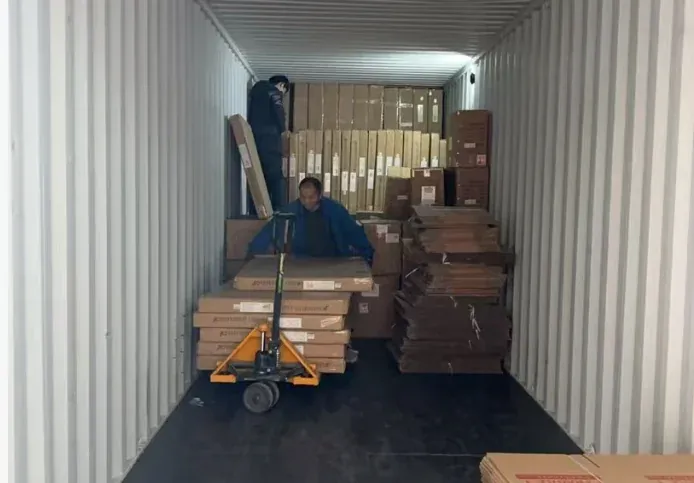
Workers loading flat cartons of home décor into a shipping container in Yiwu

Other terms you might see on a quote

  • EXW (Ex Works): you collect the goods at the factory door. Everything after that is yours, including the trip to the port and often export clearance. That’s hard to manage from abroad.
  • FCA (Free Carrier): the supplier hands the goods to your carrier at an agreed place. Often a better fit than FOB for containers.
  • CFR (Cost and Freight): like CIF, but with no insurance.
  • DAP (Delivered at Place): the seller’s side delivers to your place, but you handle import clearance and duties. Don’t confuse it with DDP.

Who decides the shipping term?

You both do. A supplier’s first quote usually uses their default, often FOB, but that’s only where negotiation starts. You can ask for another term, and a serious supplier will quote it.

Ask like this:

“Please quote two prices: FOB [port name], and DDP to my warehouse in [city, country]. Please list what each price includes.”

A serious supplier replies with a clear breakdown. If you get one vague number, that tells you something too.

Get the quote in writing, with the full term and place: “FOB Shenzhen, Incoterms 2020”, not just “FOB”. That wording goes on the invoice and into the contract, and you’ll rely on it if there’s a dispute.

Does the term affect delivery time?

Not directly, since the ship goes at the same speed. But it changes who controls the schedule. With FOB, you or your forwarder book the space. With CIF, the supplier books it, and your shipment may not be their priority in peak season.

Whatever the term, ask for the expected departure date, not only the date the goods will be ready. Those can be weeks apart, especially with shared containers.

How to choose

  • First import, no forwarder: DDP. You pay for simplicity and learn your real cost up front.
  • Some experience and a forwarder you trust: FOB or FCA, for control and visibility.
  • Want one ocean price but handle customs yourself: CIF, after you’ve checked the insurance and destination charges.
  • Regular orders or containers: FOB or FCA with a steady forwarder usually pays off over time.

Whichever you pick, compare the landed cost: everything you pay until the goods are ready to sell. Add product cost, freight, insurance, duties, clearance and delivery, then divide by the units you can actually sell. Our CBM calculator helps you estimate the shipping part.

Common mistakes

  • Comparing an FOB quote against a DDP quote as if they were the same
  • Assuming CIF includes customs and delivery
  • Assuming DDP includes every certificate
  • Not naming the exact port or place
  • Leaving the term out of the invoice and contract
  • Choosing CIF for fragile goods without reading the insurance

Frequently asked questions

What does FOB mean in practice?

The supplier gets the goods on board at the named port in China. From then on, costs and risk are yours, so you’ll need a freight forwarder.

Does CIF include import duties?

No. CIF covers goods, ocean freight and insurance to your port. Duties, import taxes, clearance and local delivery stay with you.

Is DDP always the most expensive?

The quoted number is usually higher because it includes more. Compare the full landed cost of each option before you decide.

Which is cheapest: FOB, CIF or DDP?

FOB is often cheapest overall if you have a good forwarder, but not always. Compare landed cost on the same goods and the same delivery point.

Can I negotiate the shipping term?

Yes, the same way you negotiate price. Decide before you confirm the order. Changing it later usually means a new price.

Summary

  1. FOB: you pay from the ship onward, and you get the most control.
  2. CIF: the supplier pays to your port, but your risk starts in China.
  3. DDP: one price to your door.
  4. Always write the term and the place in the quote and contract.
  5. Compare landed cost, never just the first number.

Not sure which fits your order? Send us your product, quantity and destination, and we’ll quote it.

Scroll to Top